Ground Control is a centralized web console and API for managing virtual machines across different hypervisors. Instead of juggling separate logins and interfaces for Proxmox VE and Xen Orchestra, operators can monitor system health, manage machine lifecycles, and open terminal consoles from a single place.
My role
Lead Architect & Engineer
I designed and built the system from the initial prototype in 2025 to a successful handover in early 2026:
- Built the backend with FastAPI, asynchronous task workers, and PostgreSQL.
- Developed the web interface in Vue 3 and TypeScript, focusing on high-density operational views and quick keyboard search.
- Designed a pluggable driver layer to translate different hypervisor APIs into a consistent set of VM management actions.
- Built real-time telemetry streaming over WebSockets and an in-browser terminal console using noVNC.
- Documented operational runbooks and completed the technical handover to the infrastructure team.
Why I built this
If you run multiple hypervisors in a lab or datacenter, day-to-day administration gets tedious quickly. Checking CPU usage, restarting a machine, or opening a shell requires remembering which cluster hosts it, logging into that specific panel, and dealing with differing UI quirks.
Ground Control acts as an abstraction layer across those platforms. It communicates with underlying hypervisors through their APIs, keeps inventory in sync in the background, and gives operators a fast, unified view.
Pluggable provider architecture
A key design requirement was keeping the control plane independent of any single hypervisor technology. Infrastructure teams often start on one platform and migrate over time, or run lightweight virtualization in smaller environments and heavier enterprise platforms in primary datacenters.
To solve this, Ground Control uses a driver-based architecture:
- Core lifecycle interface: Every hypervisor driver implements standard operations for connecting, listing inventory, checking host status, and basic power control.
- Dynamic capability discovery: Hypervisors have different feature sets. If a platform supports point-in-time snapshots or direct console streaming, its driver declares those capabilities, and the web console enables the corresponding controls automatically.
- Normalized workload model: The rest of the platform (search, filtering, RBAC, and audit logging) only talks to normalized data models, so adding support for a new hypervisor requires writing an adapter without changing existing API routes or UI views.
- Built-in drivers: Out of the box, the system included production drivers for Proxmox VE (via its REST API) and Xen Orchestra (via JSON-RPC over WebSockets).
Architecture
Management console
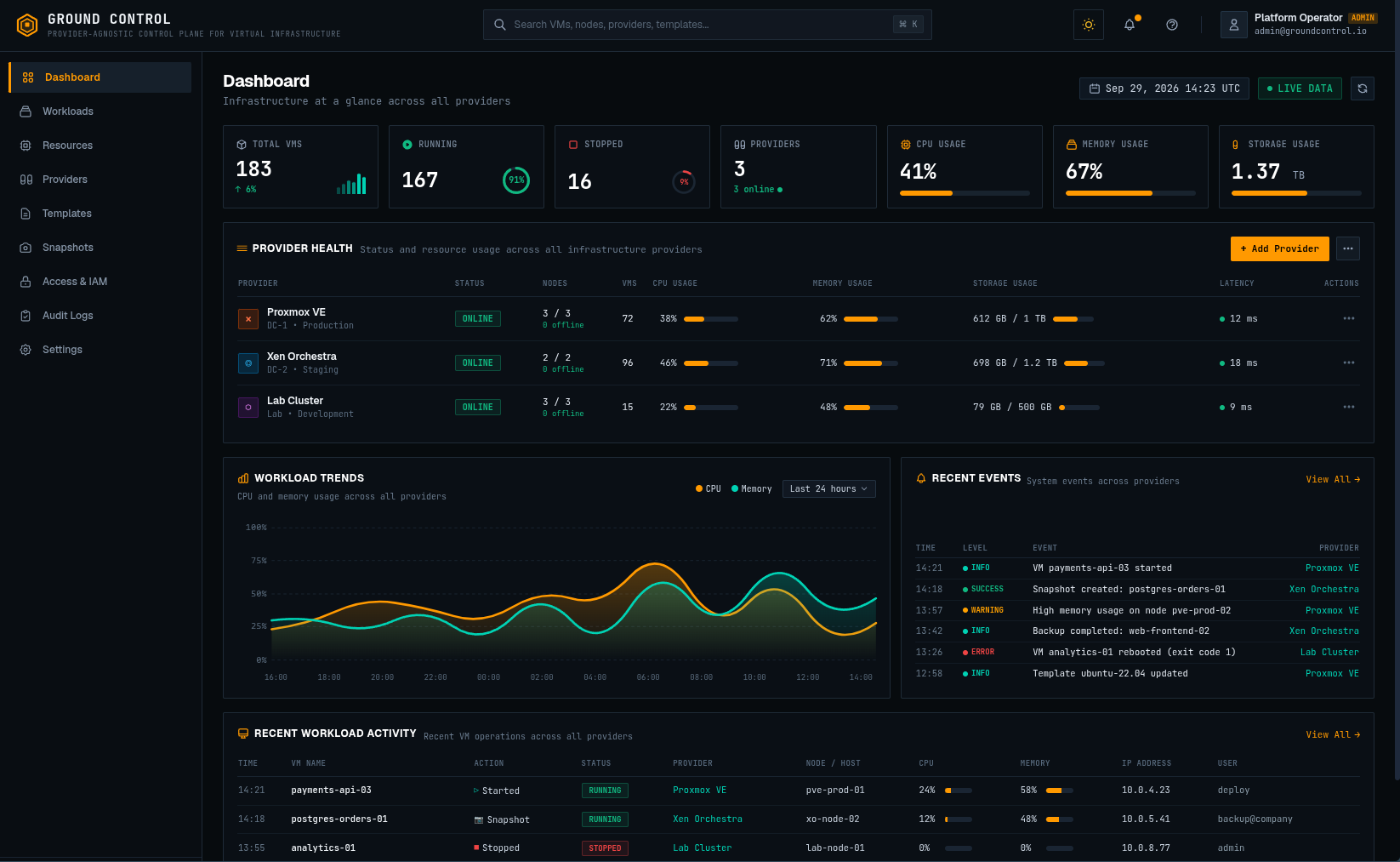
The interface is built around dark mode and keyboard-friendly navigation, providing quick access to common maintenance tasks.
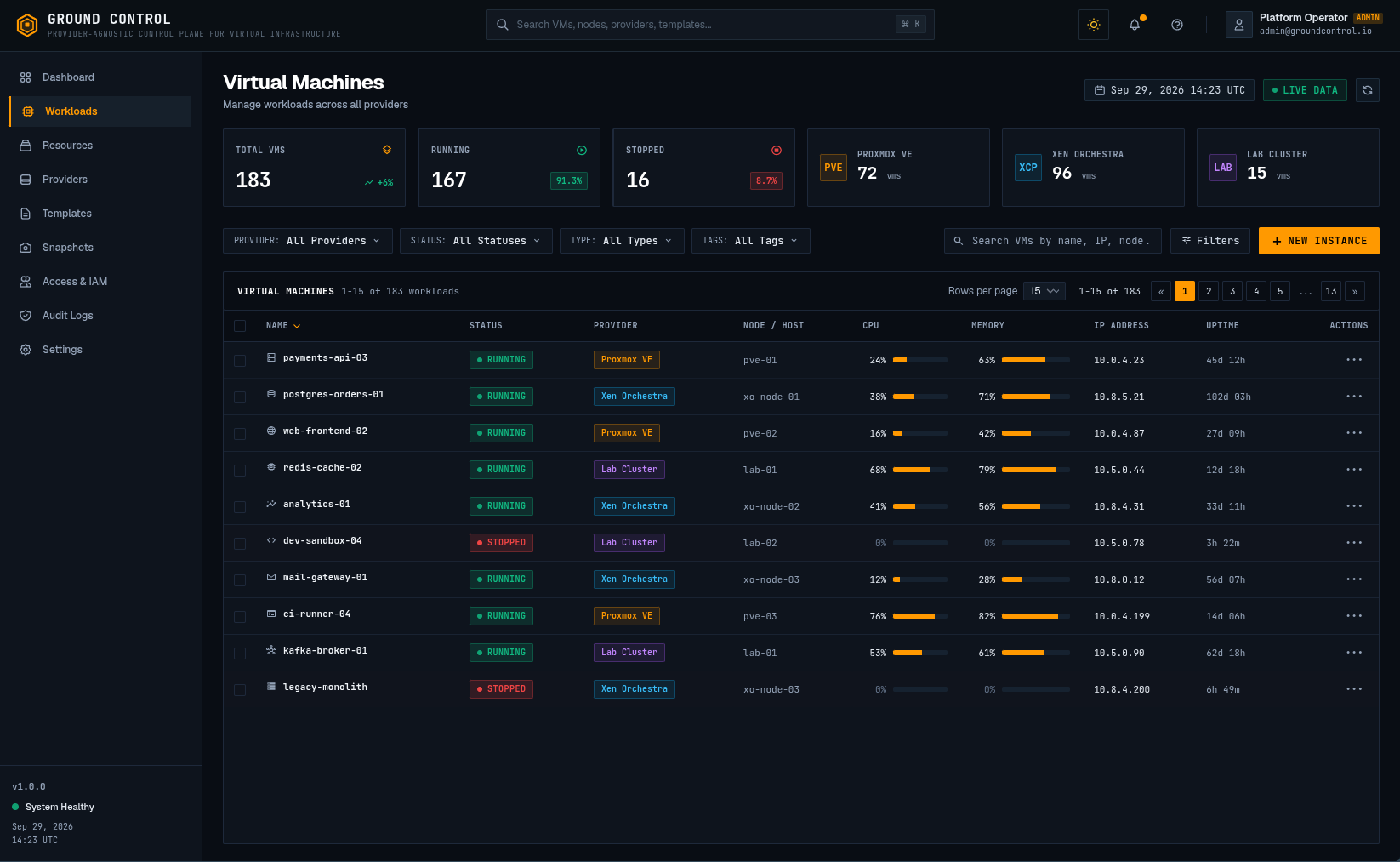
Unified workload inventory
Operators can filter, sort, and manage virtual machines across all clusters without caring where they are physically hosted.
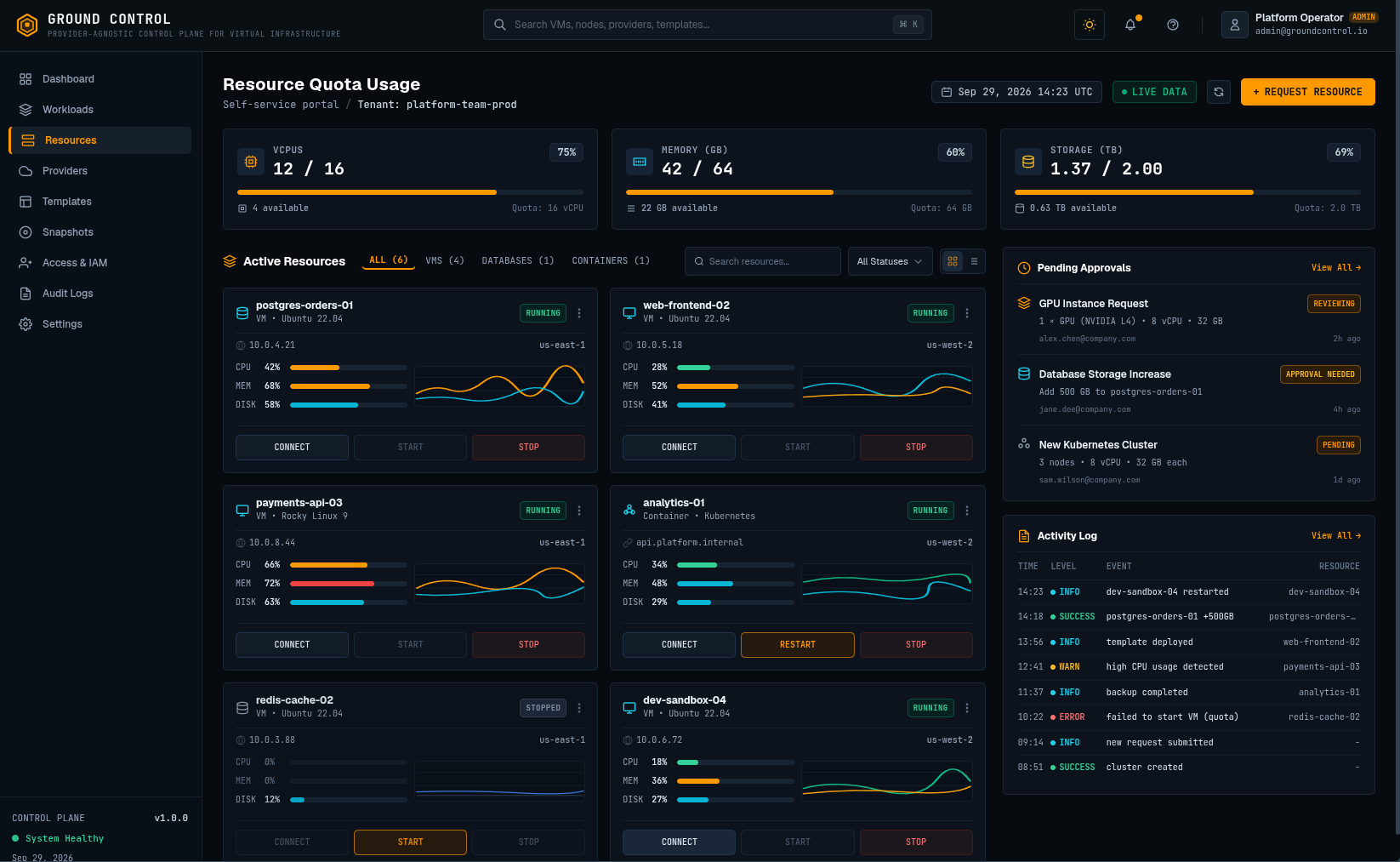
Resource quotas and self-service
Teams can see their compute and storage usage against allocated quotas and submit requests for more resources.
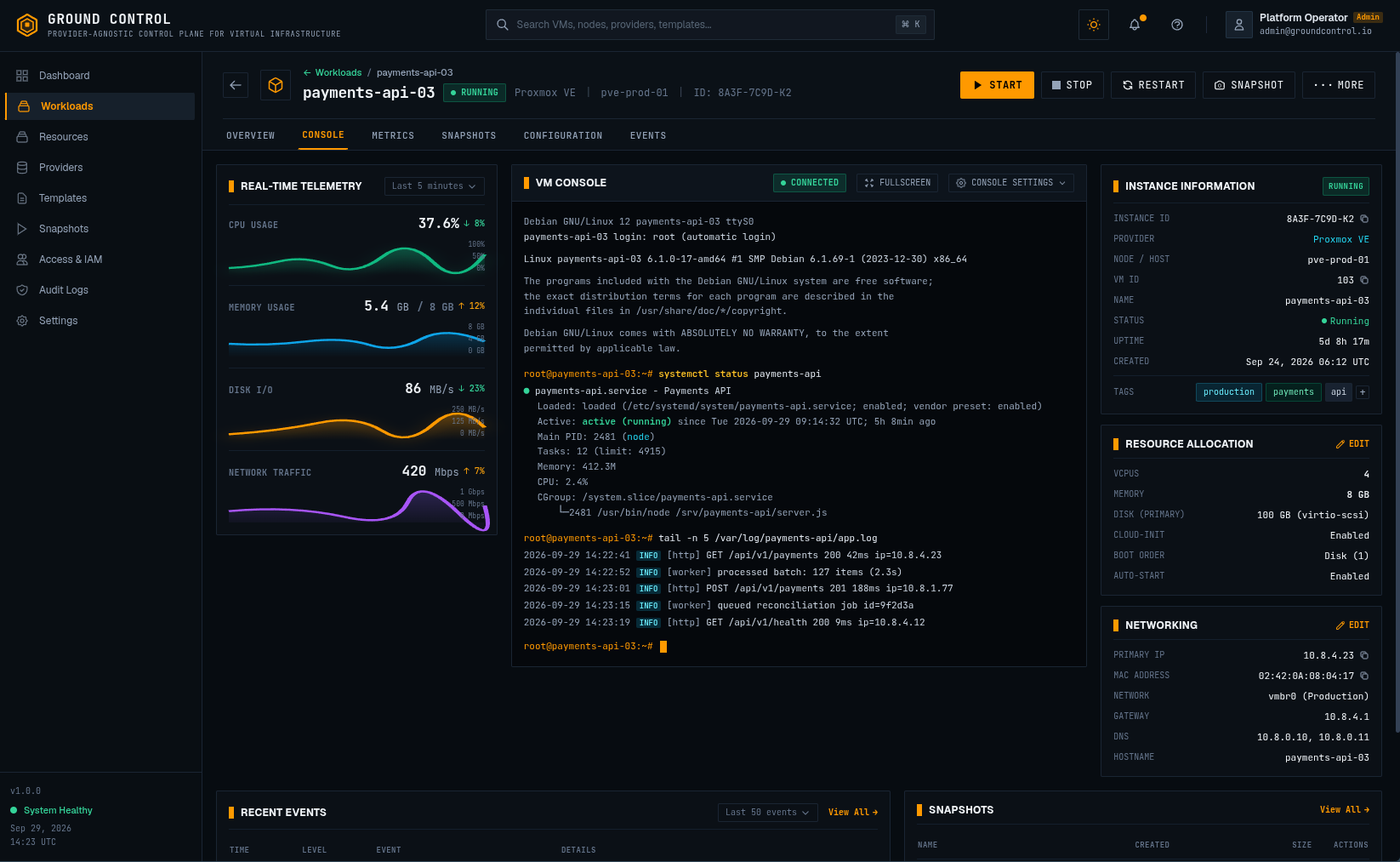
Live telemetry and web console
Operators can view real-time resource graphs and open an immediate terminal session inside the browser without leaving the dashboard.
Project status
Ground Control was developed in 2025 as a dedicated infrastructure control plane and handed over to the operations team in early 2026.